Strategy Review – Some thoughts…

Generic Products of The

It is an old trick, played by unscrupulous marketers and PR people. The less you are doing it, the more you must talk about it.

We all know the drill. ‘Vegan’ leather (not leather), ‘Chocolate flavoured’ (not chocolate), ‘Classic’ (cheap, old tech dressed up as nostalgia), ‘Home’ made (factory produced), Buses ‘up to’ every ten minutes (every 20 or 30 minutes).

British biscuit manufacturers (and by extension Irish biscuit suppliers, given we have outsourced all that stuff to Blighty these days), have been getting some heat recently because the ‘chocolate’ biscuit bars – staple of kid’s lunchboxes – now contain so little actual chocolate, they can no longer be described as being enrobed in ‘milk chocolate’.

The response of course has been to dial up words like ‘chocolatey’ (i.e.: ‘like’ chocolate), introduce stylized waves of brown to packaging and other such corporate guff. The Scouting Ireland strategy document echoes this broad theme.

‘Scouting is the answer, what is the question’ is a nice strapline, but it is not a strategy. ‘Building Tomorrow’s Scouting Today’ sounds like the line rejected by Eircom when they changed their name to the inane ‘Eir’ and came up with the mind-numbingly dull ‘for your world’ slogan, that even managed to make the old Volvo cars line ‘for life’ sound insightful and interesting.

Nor is the country ready in any event for this rather chipper approach that simply glosses over a six-year train wreck. The word ‘brand’ does not appear even once in the document. This might be because as brands go, the ‘Scouting Ireland’ brand is far from in a credible place, no matter how much we might be deluding ourselves.

The word ‘identity’ crops up, as does the word ‘heritage’, but Scouting’s recent ‘identity’ comprises mis-managing abuse and protecting perpetrators, fobbing off victims, ostracizing whistleblowers and intimidating good Samaritans, not to mention dumping national treasures (and, granted, the occasional harmless pain in the ass) out of the organization.  The rich ‘heritage’ of this 120-year-old entity / collection of entities is tainted with faded black and white or washed out colour photos containing smirking figures who presided over or participated in the mess today’s leadership is trying to grapple with.

One is not necessarily suggesting we do an ‘Irish Rail’ on it (‘We’re not there yet, but we’re getting there’ was the slogan a few years back, later changed to ‘Getting there’ and now the easily misinterpreted ‘So good you wont want to get off’ – yes, really…), but some acknowledgement of the low point and a signal of recovery might inject a little humility into what is presumably a statement of intent.

Worst advertising campaign in history?? : r/ireland

Setting aside the typos, (Venture Scouts might er, ACT like they are 9-10 years old, but they are usually a little older, at least physically) and the AI generated imagery (one page just contains two stock images – no content… always a red flag for vacuousness), the Scouting Ireland strategy feels a little thin and uninspiring.

Surely the only advantage of running the organization as a democratic wilderness is that the tiny number of decision-makers could surely afford to be bold and visionary in setting out a plan for the future, not having to content with a pesky electorate?

The word salads about ‘expanded inclusivity reach’ and ‘access to transformative outdoor experiences’ (er, going hiking) read like they are straight out of an NGO grant application or a script from W1A. There is not a lot of substance. It feels like an attempt to shoe-horn words and phrases into a document, but it fails to create a coherent or mobilising message.

Sir Humphrey Appleby, the infamous embodiment of the Whitehall public servant once remarked that it is “always better to get rid of the awkward stuff in the title”. ‘Youth participation’ and ‘inclusivity’ come up regularly in the document. Scouting Ireland (the national entity) is dismal at the former, although some strides towards greater inclusivity have been made. (Theirishscouter recalls strong resistance for instance to participation in the ‘Pride’ parade just a few years back, so things have improved in some areas)

In what is now essentially a franchise operation, where national office takes money from groups in exchange for dictating how they do things, it is in the groups themselves that programme is designed and implemented. Nationally led events are a minority sport (in an already niche pursuit), so quite what Scouting Ireland can do to influence ‘Programme and Adventure’ is not abundantly clear.

Equally, ‘sense of community’ and ‘kindnesses’ and ‘wellbeing’ come from local group leadership and group culture. ‘Safeguarding’ is a government initiative. What does Scouting Ireland CLG bring to any of these, other than curation?

‘Youth and Adults’ (sic) working together is not so much a strategic objective as a descriptor of how Scouting is supposed to operate. ‘Accessibility’ has been managed at local level for decades – the national entity has done little on this topic in recent years.

The ‘formal recognition programme’ surely already exists in the shape of the ‘awards committee’ (true, top awards mostly go to clique members but just fix the conflicts of interest – no need to reinvent the wheel!)

In truth, the ‘Strategic Pillars’ are a rehash of what has gone on for over a century, with a few additional buzzwords thrown in (Digital, inclusive, modern, etc.).

The ‘vision’ for 2030 (a thriving, inclusive movement where every volunteer feels supported, non-formal education etc.…) looks very much like it is aiming to get us back to where we were in 2004 – a quarter of a century ago! It has been a rough few years, but if that is the extent of the vision, we might be in more trouble than we initially thought…

It is positive to see a board placing a focus on strategy. Like the National Assembly, it is clunky and underwhelming, but it is a step in the right direction. What feels missing is the buy in from members. No matter how much power the board have (and they have it all), without active (and enthusiastic) member support, no strategy will work.

If the plan is to publish a fairly vacuous document and then claim it has all been a huge success, that’s one thing. If it is a genuine attempt to move the dial and future proof the Scouting brand (the promise we make to members and communities), then theirishscouter would rate this effort as ‘must try harder’!

Some suggestions

Scouting in Ireland needs to do several things in order to get to the next level and become a powerhouse and a national force once again.

  1. ACTUAL DEMOCRATIC STRUCTURES – The ‘national assembly’ was a good first step. Yes, it is patronizing and tame, but it is the closest we have been in years to a gathering where members get to play at being stakeholders. We need to go further – a lot further. Members need to feel that they have ‘skin in the game’ and can influence and change and dictate policy.

A corporate structure will most likely not facilitate this, so a parallel structure (alongside a services provider – Scouting Ireland CLG) needs to be constructed. Run by elected volunteers, this ‘association’ should run the game of scouting. The CLG entity can run the business. The volunteer CLG board will report to the volunteer board of the new ‘association’. Safeguarding remains under professional management, but with independent external oversights and accountability.

The simple fact of the matter is we will never be what we want to be if a tiny group of people get to call all the shots. Members at local level need to be back in full control of Scouting Ireland. No amount of AI generated brochures can compensate for this.

  • MEANINGFUL YOUTH PARTICIPATION – colourful neckerchiefs, flashy t-shirts and photogenic models are all well and good, but every key decision-making body within a member-led youth-focused association should have a meaningful youth participation component to it. Smiling for publicity shots and doing what you’re told is not youth participation.
  • POWERFUL EXTERNAL RELATIONS – From Political parties to corporate entities and media outlets to fellow charities, Scouting Ireland needs to build a team of dynamic, energetic, clever and charismatic people who are versed in the positive story of Scouting and what it can do (and what it does) for society in Ireland. This team need to set about a five-year process of building links and growing influence with decision makers in all facets of Irish society who can help Scouting to grow.

Get this right and the positive news headlines and corporate funding will flow in time. People like to be associated with success. Success comes from teamwork. Teamwork is rooted in equality. Equality comes from democracy. It is really not complicated.

  • BALANCED MEMBER SPREAD – 60% of the youth membership is under ten years of age (if you believe the strategy document; in truth it is probably slightly higher). In any event, the plan to introduce a younger age range section (aged 4-6) will exacerbate this imbalance. It will drive profitability per member, but it will further erode the impact of the older sections.

Some step-change planning is needed to build Scout membership, expand Venture Scouts and make Rover Scouts a credible proposition. For Scouts, explore collaborations with schools in particular, but also with churches/mosques/temples/synagogues.

Run some focus groups to understand better why people in this age range do not get involved and what might encourage them. Place a strong focus on adult/facilitator training for the older sections. These are complex programmes to run and motivating adolescents and young adults requires special skills far beyond knowing how to tie a knot or light a fire.

Venture Scouts could be ten times the size if it was open to a wider audience. Many teenagers complain of being bored and not having enough to do in their community. Is there a way to create some value for bored teens by offering some sort of stand alone venture scout package that can be set up in communities?

Rover Scouts and Universities have a long history in other countries. Is it time to examine how some sort of Rover based concept might succeed in third level institutions and Vocational colleges around the country? Students are often keen to join clubs, can be lonely if away from home and many would value a support network.

We looked at this before and could not get past the ‘but what about the reporting structure?’ question. We are running a youth organisation, not a chain of supermarkets. Where there is a will, there is a way.

Many scout groups have an aversion to dealing with older teens. Scouting Ireland could tackle this with changes to fee structures, lower cost training for Venture and Rover facilitators and other creative ideas.

  • LOBBY FOR LESS FRICTION IN VOLUNTEERING – Theirishscouter presently volunteers with the Scout Association (UK) in Borneo. There, the application process is smoother than in Scouting Ireland, yet each year around 20% of the volunteers in our Scout Group drop out before they have even completed the process to join, citing complexity and time intensity in the applications process!

Volunteers are getting harder to find. Good, competent, passionate volunteers are rarer still. We should be doing all we can to get hold of and retain these people! We are competing with other entities and with other pursuits for their time and focus.

Scouting Ireland should be lobbying the relevant entities to streamline compliance and admin and speed up / smoothen out membership applications. Between technology and data management it should not take as long, nor should it be any way as arduous.

If our services are provided by a business, then let Scouting Ireland CLG think like a business and drive efficiencies and drive down cost to its customers. Monopolies that deliver below par service do not remain monopolies for long – THAT is another strategic consideration worth mulling over.

  • LEVERAGE OUR STRENGTHS – Scouting equips young people with skills and problem-solving capabilities. Why not put together a proposal to work with a government agency to offer an employment program for suitably qualified or eligible people, young and old?

These people could enter into a formal programme to gain skills and experience working either directly with young people (in groups or at regional hubs) or on skills programmes (providing services to our members) for a fixed period, at the end of which they receive a certificate and enhanced employment prospects.

This could be a three-pronged approach; (1) school leavers (working in groups and regionally on activities), (2) graduates (working in national office or at national campsites), (3) retirees (bringing their skills into the organization to support volunteers).

Imagine the number of people who might wish to get involved. Imagine the potential positive impact on our youth members and on the career prospects of the participants? Additional support for volunteers, provided by the services company where Scouting provides the training and the government provides the funds. Ok, a slightly ‘off-piste’ idea, but the point is, we should be thinking BIG.

  • HOST A MAJOR INTERNATIONAL EVENT – It does not have to be a Jamboree – we are not there yet (but hold that thought). What about a regional meeting of WOSM or some other gathering of influential figures that gives us a reason to ensure we shine and showcase the very best of what we can offer?

What about (later) a ‘five nations’ camp for people from across these islands? Or a gathering for EU Scouting Organizations (we could include our UK friends on the premise that they are just next door, after all…) This could be set as far as ten years out; to allow for the planning and building of capabilities to ensure it goes down in history as the crowning glory on what was the beginning of a new era for Scouting in Ireland.

HEAL WOUNDS TO MOVE FORWARD – We cannot ignore that Scouting Ireland is a fractured entity. That has not been made right.

We have wrongs to right with victims of historic abuse. We should do the right thing here and reach an equitable and amicable conclusion for all concerned. Lawyers win from drawn out negotiations – nobody else does.

In the view of theirishscouter, it will be difficult to draw a line and build upwards when so many members are still seething about the disrespectful attitude towards members as displayed by former boards (and some staff). Whilst the mood music has changed a bit of late, the abuse of power and lack of transparency still manifests itself frequently enough to remind everyone that there is in truth little to no accountability for those in key decision-making roles.

That needs to change.

All former Chief Scouts should be invited to form a ‘Council of Elders’ to oversee the Boards activities and be the conscience of the organisation. Independent and fair minded. Trusted by the members. Advisors on the Scout Law. Impeccable credentials in balance and integrity.

The board needs to offer a full reinstatement to members dumped unceremoniously out of the organization without natural justice or due process and in almost all cases, with no just cause. Specifically, Christy Mc Cann – the former Chief Scout, David Shalloo, the former Chief Commissioner (youth programme), and the former National Secretary Oliver Kehoe. A former group of board members took the unilateral decision to expel these members for no reason. It was a morally bankrupt decision. It had no basis in law, nor any justification in Scout law.

Equally, Don Reynolds, a corporate governance specialist who raised concerns about er, corporate governance that the Charities Regulator recently vindicated, should also receive an apology and be reinstated. Mr Reynolds maintains he was defamed as part of the efforts to remove him – that may yet end up before the courts, but a swift and generous (cost free) gesture now could head that off.

Apologies to current members Jacques Kinane and Therese Bermingham should be made, the former who was chastised for raising matters of concerns around governance with the board (in conjunction with Mr Reynolds) and the latter, a former member of the European Scout Committee and one of the most competent grandees of CBSI and Scouting Ireland, who along with Christy Mc Cann et al was the victim of a corrupt process blown out of all proportion.

In reality, most if not all of these people have moved on. Most if not all no longer have much interest in Scouting Ireland. Those expelled will likely decline the chance to return. This is of little consequence. The fact is wrongs were done. They should be put right and be SEEN to be put right. THEN we can all move forward together.

  • SEEK OUT TALENT – Scouting Ireland is rammed with talent. Much of it is focused locally. Many luminaries lost interest when democracy went out the window and the era of ‘Staff good, volunteers bad’ came in (thankfully we seem to be moving on from this rather binary and simplistic view).

The board should start engaging with some of these luminaries and grandees. We all know who they are. They are scattered all over the country. They have vast knowledge and might be tempted to reinvolve themselves in an entity where they have a stake and some skin in the game. Some might have retired; some might have moved on. Many will be still around. There is goodwill and skill to be sought out. These people can build the competencies in a new generation of volunteers and ensure the national skillset is restored.

If we can figure out how to rebuild the sense of possibility and sheer optimism that existed when Scouting Ireland first came into existence, the possibilities are literally endless. If old foes can set aside differences and coalesce around the central idea of Scouting and its core purpose, there is a lot that can be achieved.

What happened in 2018 is the outcome of old foes NOT setting differences aside. We have seen how that works out, so maybe it is time to try something new.

It is time to think big and long term. That requires vision, but also courage.

Theirishscouter knows a little bit about strategy, given it is part of the day job. These are live documents. More than this, a strategy in writing that sits on a shelf or unopened in a laptop or phone (or printed out and stuck on a Scout Den noticeboard) is not a strategy. Like a declaration, a strategy must be the precursor to action. It must energise and excite those who are needed to drive it.

It is not too late to do a bit of redrafting.

Reverse Mentoring

Everyone can benefit from mentoring, but have you tried the alternative?

Theirishscouter has been fortunate in having had some impressive and generous mentors in life to date, both in career but also in Scouting.

Seasoned figures with vast banks of experience, who have offered sage advice. Sometimes, these figures have gently curbed the odd excess or tendency towards ill-judged actions. In one’s earlier days, these potential excesses are often driven by inexperience. Later, the odd bout of cynicism or a desire to rock the boat a little too much can sometimes benefit from a quiet word.

A mentor can play a central role in one’s life. More commonly, they are the person around who’s kitchen table you pace, late at night as you work through a problem – often one of one’s own making. They might be your hiking companion, labouring up hills and skirting rivers whilst you huff out your problems as they gasp back thoughts on how to solve them.

Of course, as one moves through life, many of those rough corners get smoothed out by life itself; the experiences, errors of judgement, mistakes and ‘seemed like a good idea at the time’ ideas that upon mature reflection, never quite seem worth repeating.

We all probably learn far more from our mistakes than from our successes. A mentor however can guide us though difficult patches, new challenges and sticky situations we have not encountered previously.

The tendency to look upwards in age range for a mentor is entirely understandable. After all, is it not experience one seeks when inviting a mentor into one’s deliberations?

Theirishscouter realized a few years back that mentors in fact come in all shapes and sizes – they also come sometimes with surprising age profiles.

As a scouter, most of us come into contact not just with inspirational elders on the Scouting trail, but plenty of younger people who can also inspire. Theirishscouter learned early on (as no doubt some readers did), that seeking and listening to advice from a young person can provide a lot of value.

Interaction with water provides an example. A few years back, a highly energetic toddler from the offspring collection took off in a pool towards the deep end. Theirishscouter’s general view on water has always been that it is palatable to drink and acceptable to wash in, but that’s about all the interaction required.

As a side note, when Scouting Ireland formed, the pre-uniform period was a bit of a free for all and theirishscouter could not resist getting hold of an SAI shirt to wear at NMC meetings, just to irk the elders – not the mentors; the ‘old boys’ club (the mentors approved!). It also afforded an opportunity to wear a Sea Scout jumper (as vastly preferable to wearing a shirt, but not credible for a land lubber prior to this…)

In any event, as junior went ever further into the deep end, merrily suggesting I follow him, I did precisely that. He is now eleven and theirishscouter, whilst not a strong swimmer, is infinitely more comfortable in water – a great example of exiting the comfort zone at the invitation of a younger mentor. My Dad had tried to get me swimming when I was in Beaver Scouts, and no amount of bribery would get me anywhere NEAR water…

Whilst Scouters of course can often get away with er, supervising some of the more active pursuits in Scouting, when one has offspring there is usually an expectation of full and enthusiastic participation, be it zip lining, white water rafting, snorkelling or clambering into a roller coaster. It is not mentoring in the conventional sense, but it does re-frame thought processes and create the conditions for trying new things.

As children become tweens and then teenagers, it is a mark of respect to treat them and their views with ever greater seriousness. All opinions count, but listening carefully to teens, following their line of argument and acting on it as much as possible builds a strong relationship. It also throws up some great insights.

Of course, outside the family and beyond Scouting, the idea of seeking ideas and advice from younger people works too. Theirishscouter retains a network of mentors in the world of business, but these days some of these people are starting out in their careers or are a few years less advanced on the career curve.

There is a great opportunity for exchange of advice in these circumstances, with timeless challenges solved for the younger person by the sage advice of the worldly executive, whilst the grizzled elder can get great insights and ideas from the Young Turk on topics around new technology and new ways of working.

Theirishscouter would advise everyone to consider adding a new mentor to their line up over the summer, be it an elder or younger (or both). Why not BE a mentor to someone too – you might find yourself lending some ideas or methods to someone who will be quoting you in years to come to another generation.

*Theirishscouter normally does not publish two articles in rapid succession, however there is a bit of a backlog of positive pieces that keep getting held up by media stories, hence the desire to publish something quick, just in case!

Sorry. Not Sorry

Sorry not sorry – illustration with lettering

The recent revelations about former MP and political leader in Northern Ireland Jeffrey Donaldson, has placed his former political party the Democratic Unionist Party in the spotlight. Specifically, questions from across the political and societal spectrum are centred on who in the DUP knew what about his activities and when did they know?

It follows a well-worn path as miscreants are unmasked in entities across these islands, not least in our own organisation. Such revelations tend to result in lots of handwringing and navel gazing but little tangibility in terms of accountability for people who knew things and looked the other way.

It is topical because the recent non-apology by the board of Scouting Ireland to the former Chief Scout Christy Mc Cann on the topic of alleged interference in safeguarding procedures, merely confirmed what most of us knew all along – there was no case to answer – at least not by Mr Mc Cann or his colleagues.

Uttered through gritted teeth, said apology had the tone of a utilities company somewhat ungraciously acknowledging an effluent spill. It said a lot about just how corporate we have become. We ‘do things right’ but miss the boat when it comes to ‘doing the right thing’. The former can help tactically, but the latter more strategic approach usually delivers a better long-term outcome.

The note sent to former board members to (paraphrasing) ‘apologise for any hurt or offence’ the non-apology might inflict upon them had to be read twice, just to ensure it was not some sort of prank. It took from and underlined the insincerity of the public statement.

One suspects Mr Mc Cann’s colleagues who were also dragged through a process that smelt as bad as it looked and lacked any trace of fairness or natural justice, will not be receiving an apology. Mr Mc Cann took a legal action and Scouting Ireland’s response was the result of a settlement. There was no goodwill, nor conscience involved.

Of course, a report commissioned from the eminent lawyer Lorna Lynch had already exonerated Mr Mc Cann. A sub-committee of the National Management Committee* (comprised of at least two members who did not excuse themselves despite obvious conflicts of interest) seem to have used Mr Mc Cann et al as a useful way to divert questions away from other people.

Those questions, a little like the queries now being posed to the DUP leadership up North, might include (on the topic of historical abuse cases), who knew what and when. Also, why did it take an outsider to find (re-find) the files and alert the statutory authorities.

There are still many questions hanging over the multiple historic abuse cases. There are questions for those who were supposed to be managing safeguarding in Scouting Ireland at the time and right up to the point when these files were apparently discovered and examined in 2012, before being inexplicably placed back into storage for six years.

In addition, many of those who were in senior positions nationally in the Catholic Boy Scouts of Ireland and the Scout Association of Ireland in the 1970’s and 1980’s have retired or have passed on at this stage, but some are still very much involved in day-to-day Scouting. What did they know?

An RTE documentary on the subject of a former high profile CBSI member against whom many allegations were posthumously made, indicated clearly that his activities were well known by at least some in the upper echelons of that organisation in the 1980s and 1990s.

We seem to spend a lot of time simpering about how much we care for the victims of historic abuse, yet curiously we seem less keen at rocking the boat and posing some pointed questions at volunteers and staff who may have insights that could help shine a light on a rather dark aspect of Scouting’s history.

That light of course was rather conveniently shining in entirely the wrong direction for several years. Now that the organisation has caught up with the membership and recognised that this was at best a fabrication driven by astonishing incompetence and at worst a cynical stitch up to protect others, is it time to conduct an investigation into who drove this entire debacle and why?

Many members may not know or recall the background to Mr Mc Cann’s removal as Chief Scout. A meeting took place between Mr Mc Cann and an individual against whom a serious complaint had been made.

By the time Mr Mc Cann (and a second senior figure) had met this individual, the DPP (Director of Public Prosecutions) had already decided (and communicated) no action would be taken. The individual concerned had requested the meeting.

The contrast incidentally, between the speed of this individual’s removal from active duty (and prompt removal from the database) and that of another member against whom many allegations were made over a lengthy period and who was ultimately convicted and jailed for the abuse of children, but who was rather well-connected with the right clique, is worth noting.

The Van Turnhout report produced by Gillian Van Turnhout (a former Senator and Chief Commissioner of the Irish Girl Guides), had highlighted how the treatment of individuals in Scouting Ireland was directly linked to how close they were to the dominant clique running the organisation behind the scenes. The report, commissioned by the government in 2019, was completely ignored by Scouting Ireland.

Christy Mc Cann had three flaws that led to his downfall. He was naïve – he lacked the political savvy of some of his predecessors. He trusted people – theirishscouter met him once and challenged him to be ruthless on a critical matter. It didn’t happen. He is not a ruthless man. But most serious of all, Christy Mc Cann was not in the clique. This made him a very handy and expendable scapegoat. The Minister wanted a head on a plate. She simply got the wrong head.

Mr Mc Cann did not inform the board of the meeting. That’s it. That’s all he failed to do.  One can take a view as to whether a senior officer needs to declare all meetings, especially sensitive ones, with the board. In any event, Ms Lorna Lynch, a distinguished barrister commissioned to write a report and make findings on the matter, did not consider that Christy Mc Cann had, by not informing the board or by having the meeting, in any way interfered with a safeguarding case (the rather implausible basis for his removal). In essence, the Lynch report exonerated him.

So why did a sub-committee of the by then moribund National Management Committee, make a finding that ignored the Lynch report and zone in on the ‘didn’t inform the board’ red herring?

This is where the term ‘conflict of interest’ raises its head. The meeting Mr Mc Cann had (with another senior member) offered a useful diversion from the real questions that strangely were never posed, nor answered. Some of those keen to avoid questions rather helpfully (and no doubt entirely coincidentally) had some close personal friends on that committee.

The real issue was historical files containing details of abuse cases stretching back to the 1940s but also including files from the 1970s and 1980s. Some of those files named people who knew things and did not disclose them. Some of those people were (and some still are) active in Scouting and rather well-connected with the clique that Ms Van Turnhout references in her report.

Another question: Who had oversight and access to these historic files? Spoiler alert: Mr Mc Cann did not, nor did the other volunteers removed with him (David Shalloo and Ollie Kehoe, former Chief Commissioner and National Secretary respectively).

Who was responsible for safeguarding in Scouting Ireland at the time the files were discovered? How long was the existence of the files known before the relevant authorities were alerted?

Another interesting side note: The safeguarding specialist Ian Elliot was hired after senior volunteers insisted on it, in the face of some stiff internal resistance. This resistance could have been reluctance to have an outsider involved, or some other political factor – but nobody has asked the questions!

Quite a few members of Scouting Ireland (and more than one journalist) have hypothesised privately to theirishscouter that the spotlight was kept on Mc Cann et al, because if it was not pointing there, where would it point instead?

Mc Cann and the others were the proverbial ‘fall guys’. The Minister wanted accountability. The organisation needed someone to blame because the minister was threatening to withhold funds. Of course, the Minister never had the full story. She was fed (via her civil servants) a narrative that carefully placed all the blame on specific senior volunteers.

Nearly three hundred files, ranging from bad to horrific, hidden from sight for years. Was it simply incompetence or something more sinister? Either way, Mc Cann had nothing to do with it – he was a handy scapegoat who was too honest for his own good.

His removal from office and the utterly callous manner of his expulsion, after a lifetime of not just blemish free, but outstanding service, looks like it was designed to protect others. This is a widely held view among members of Scouting Ireland who know the background. It destabilised what was already a dysfunctional and fractured national entity. It generated more division at a time when unity would have steadied the ship. Arguably we are still a long way all these years later, from recovery.

A price worth paying to protect some important people, it would seem.

WHERE TO NEXT?

The correct course of action now, in the view of theirishscouter, would be to issue a much more fulsome apology – one that means what it says. Christy Mc Cann is no threat to Scouting Ireland. In fact, he embodies the very values the organisation needs to project. Honesty. Decency. Kindness. Integrity. He is not perfect. He was naïve and lacked ruthlessness – I doubt he would make those mistakes again. He took on the role of Chief Scout at a time when it included the ‘Chairman of the Board’ role too. He was great at the former and not so great at the latter. Both need very different skillsets. Some of his predecessors were great at the ‘Chairman’ bit and less good at the ‘Chief Scout’ bit. The former Chief Scout role arguably asked for super-human qualities from its occupants – whoever they were.

Scouting Ireland should welcome Christy Mc Cann back as a ‘Chief Scout Emeritus’. (Maybe there should be a role for all former Chief Scouts as a sort of ‘Wizengamot’ or ‘Witenagemot’ to be more precise). With respect to various Chief Scouts, we have never had a more popular Chief than Christy Mc Cann. He has been through an ordeal that has been hugely disproportionate relative to the transgression.

His mistake arguably pales into insignificance versus the glaring governance oversights of late that the Charities Regulator has highlighted. Where is the accountability for those who led us into that mess?

If we accept the principle that leaders sometimes make innocent mistakes and make them with the best of intentions, this principle must cut both ways. If (as seems likely) we are never going to ask the individuals who ran safeguarding in Scouting Ireland for close to two years prior to the discovery of historic abuse cases, the questions they need to answer…. If we are going to gloss over holding to account those who presided over safeguarding during the period when the national association and its hard won, carefully built reputation crumbled before our eyes and has yet to fully recover…. If we are going to brush aside the frankly astonishing conflicts of interest held by specific individuals who made the rulings that led to Mr Mc Cann’s expulsion in the first place – the ruthless, disproportionate destruction of the reputation of four fellow Scouters (Mr Mc Cann and three others) in the name of blatant protection of friends… then our moral compass and the Scout law we all profess to be following dictate that Christy Mc Cann deserves reinstatement in some meaningful form.

…. Assuming he wants anything to do with Scouting in Ireland after the appalling way he has been treated.

On the wider, deeper and far more complex questions that would involve pointing the spotlight in the right direction, the board can do what previous boards have done and just gloss over everything and opt not to ask questions of people who are still members and have information about their handling of safeguarding cases and why some individuals received very different treatment to others.

The alternative would be to ask questions. That would be a complex and painful process. It would cause embarrassment in the short term. It would not endear the board to a still well-established clique. It could however bring some closure to a festering abscess that continues to blight the recovery and growth of a still deeply scarred entity.

There are people inside Scouting Ireland who have been incompetent. There are others who have known things and chosen to look the other way. There are likely still others who did things and have not yet been held to account. Much like a poisonous weed entangled in a garden of flowers and trees, extracting these people would be very difficult. There would probably be collateral damage. For this reason, a proactive approach seems unlikely.

Mind you, truth eventually outs. As the DUP might now be reflecting, this has a habit of happening at inopportune times and with potentially significant consequences.

  • The ‘National Management Committee is the predecessor of the current ‘Board of Directors’ of Scouting Ireland Limited.

Hold on tight!

Just when we all thought things were finally getting on an even keel.

REGULATOR REPORT

The Charities Regulator has today issued a report that, according to RTE News ‘uncovered numerous structure and governance failures in Scouting Ireland CLG and related charities’.

At the core of the report is the question of who owns key properties used by the membership. It would appear (reported in today’s ‘Irish Times’), according to a statement by Madeline Delaney, the CEO of the Charities Regulator, that there is a ‘lack of consensus’ around who owns what, with potential implications for Scouting Ireland CLG and Scout Groups using certain properties. It also appears that at least one entity that is a possible legal owner of Scouting Ireland properties is not on the Charities register and thus could be operating illegally, again with potentially significant implications.

This feels like vindication for two volunteer directors of Scouting Ireland CLG unceremoniously dumped by the previous board, with the fawning compliance of some members in a rather shameful act of acquiescence at an EGM in April 2024.

Don Reynolds, a corporate governance expert of a listed company and Jacques Kinane a consultant in a global consulting corporation both long-time members of Scouting Ireland, volunteered as directors of the Scouting Ireland CLG board. During their time on the board, they say they identified and highlighted various instances of concern related to governance. They were suspended and then removed when relationships between them and the rest of the board deteriorated. They argue they were not getting answers to key questions. The other board members contended in essence they were er, asking too many questions.

UNDER THE BUS?

An EGM of Scouting Ireland CLG was called and the majority of ‘shareholders’ present (the group representatives) voted to remove Messrs Reynolds and Kinane. Interesting to note that a fairly significant minority rejected the proposal, so it was far from a ringing endorsement. Attendance at the meeting was also low, reflecting the fairly high level of disengagement all the shenanigans and skullduggery of recent years has created.

Both Reynolds and Kinane were registered and recognised under the Protected Disclosures Act 2014 and the Protected Disclosures Amendment Act 2022 as whistleblowers at the time of their removal from office. Both made protected disclosures and were/are protected from removal from office or other intimidatory tactics by law. Presumably Scouting Ireland CLG has somehow managed to uniquely become exempt from whistleblower legislation.

KEYSTONE SCOUTS?

This latest Charity Regulators report seems to suggest that in recent years those appointed and elected to run the national organisation were at best out of the loop on key matters of governance – or at worst were either very badly briefed or simply did not understand how governance structures and associated regulation and legislation work. Or both.

Ms Delaney, quoted in ‘The Currency’, a long form Business & Political publication, said “The inspectors investigation showed that two parallel governance structures exist – only one of which is on the Register of Charities – for what is essentially the same organisation. There is a lack of transparency and accountability across a number of charities and related organisations (in Scouting Ireland) around ownership and control of charity assets that is concerning”

Ms  Delaney continued: “While I acknowledge that, according to the report, the charity trustees of Gasoga na hÈireann / Scouting Ireland CLG made some efforts in recent years to resolve matters and exercise control over its charitable assets, these efforts were not sufficient or persistent notwithstanding the challenges presented”

These remarks from the CEO of the Charity Regulator are surely a cause for concern. Public servants are not generally known for an inclination towards hyperbole.

This is all the more confusing given the seemingly endless procession of accountants, lawyers, consultants and PR types being paid fairly hefty amounts of member fees to ‘advise’ the board on how to run the company.

It all seems complex, yet in some ways it is quite simple. Why do all these legacy associations and entities still exist? Why was the former board so keen to get its hands on properties owned in trust (including scout dens of many groups). Why are relationships between the custodians of all these dormant entities and the board of Scouting Ireland Limited so poor? What is the situation now under the current board – an entirely new group of people?

The former board (many members of which were there for a full six year term or the major part thereof) would routinely dodge any probing questions on this and other matters of governance by simply saying “Its complex and you wouldn’t understand” or words to that effect. Of course, a time-honoured way to help stakeholders understand things is to er, explain it to them…

The bottom line from the Charity Regulators report is vintage QUANGO talk. ‘We have found some problems and now we think someone else should do something about it’.

It is not clear what happens next, however this is quite a serious matter.

BOARD AVERSE

A lot of members of Scouting Ireland have simply avoided seeking election to the board because the findings of the Charities Regulator this week have frankly been an open secret inside Scouting Ireland for some time. Who wants to risk their personal careers, reputation and credentials to join a board where one must sign documents promising not to ‘rock the boat’, hold staff accountable or express any views contrary to the majority (I am paraphrasing but read the application process for yourself and see what board members must sign up to – it is a brave person who would do so in my view).

Those board members who are now in situ joined after all this mess was created and it would be unreasonable to blame them for it. They do however have a golden opportunity to sort it out. Handled well, this becomes an incredible opening for brand repositioning.

WHAT TO DO?

An acknowledgement that there is a problem. A declaration of cooperation with the Charity Regulator to resolve the issues as quickly as possible. An external mediator if necessary to gather all warring factions (all these related Scouting entities) together and refocus on what is good for youth members (today’s and future members too), not what is good for the bottom line now – tempting though that might be for people running a company with financial challenges.

Don Reynolds and Jacques Kinane should be reinstated (if they agree) and should receive a formal apology. At the very least, it should be formally recognised that these people raised issues that are now proven to have at least some basis in fact. The problems did not manifest themselves overnight. Decision makers, both volunteer and professional must have known about them – and for some period of time too.

DOUBLE STANDARDS?

Let’s not forget we ruthlessly removed a Chief Scout, a decent and kind person, and destroyed his life-long scouting career because he had one ill-judged meeting that a formal report concluded did not even constitute a breach of his responsibilities. We also destroyed the scouting career of another very decent and energetic young man, again for a silly mistake and again one from which he was exonerated by a report commissioned by the organisation. We humiliated a doyen of World Scouting and we dumped a competent National Secretary – all on rather shaky legal ground and most certainly on shaky moral grounds.

Are we seriously going to brush a report from the Charity Regulator under the carpet and not ask some questions of those who made (or did not make) decisions that got us here? Some are the same people who rushed to judgement on Christy Mc Cann (the former Chief Scout) and his colleagues. One wonders if they would hold themselves to the same high standards?

Whatever happens, theirishscouters advice to the current board would be do not limit the resolution of this mess to just ‘doing things right’ from here on in. Also ‘do the right thing’. It has always been part of Scouting’s brand DNA. Scouts do the right thing. (Corporate types, as theirishscouter knows only too well need to ‘live the brand’, if it is to have credentials beyond the business).

AN OPPORTUNITY IN DISGUISE

This is a messy and embarrassing report for Scouting Ireland, coming on top of lots of other messy and embarrassing revelations over nearly eight grinding years at this stage. It may not be the last unpleasant set of revelations, but as an organisation we can at least try to reset the narrative and from now on be more open and more transparent in how we take the news and respond to it.

It genuinely does feel like SI finally has its first competent CEO in well over a decade. The board members in place now seem competent too, clear-minded and open to doing things right. There seems to be a new air of integrity and professionalism beginning to permeate. This is all great news.

A bad new story can be turned into a good one, if the right decisions are made now.

https://www.irishtimes.com/ireland/2026/04/27/lack-of-consensus-around-who-owns-properties-used-by-scouts-charities-watchdog-says/

https://www.rte.ie/news/ireland/2026/0427/1570478-scouting-ireland/

https://thecurrency.news

The Youth Vote

The recent announcement by Scouting Ireland that it will run some pilot groups to explore the viability of introducing Scouting to children below the age of six, highlights a few interesting things.

Theirishscouter will immediately signal an interest here in that I have for some time thought such a move could have merit, especially given other large youth-focused entities in Ireland, have long been accessible to young people from the age of three or four.

Indeed, theirishscouter was a beneficiary of an earlier trial of this type when joining one of the first CBSI Beaver Colonies during a similar trial period, (sometime back in the er, mid seventeenth century…)

In a pre-2018 Scouting Ireland (the democratic one, where the members were in charge), this sort of initiative would have (and did) run into all sorts of complications, delays and resistance. Democracy, as Winston Churchill once said (I’m paraphrasing) “is the worst form of governance” * (he said ‘government’).

The truth is, a system with limited democracy can sometimes drive forward major projects and initiatives that might otherwise take years or worse, never get off the ground. This sort of thing needs leadership with vision and who can articulate that vision and bring people with them – something we’ve had a conspicuous paucity of in recent times.

Scouting has long fretted about the relative popularity of Beaver and Cub Scouts, yet Venture Scouts has been a niche pursuit for decades and Scouts increasingly punches below its weight in the age range nationally. Rover Scouts has always been tiny and is largely dependent on finding enthusiastic proponents in a group, whose profile is frequently if not always quite different to the volunteers in the other programme sections.

The ever-decreasing membership as people advance through the programme is hardly a surprise given each latter tends to be a sub-set of the former. The number of people joining ‘off the street’ as opposed to through section transfer shrinks dramatically after the Beaver to Cub link. Younger children participate in a vast array of pursuits. This reduces dramatically once second level schooling commences for a variety of complex reasons. The bottom line however is Scouting has traditionally struggled with Cubs to Scouts retention in anything like the numbers needed.

(At less than 1% of the population, one could argue that Scouting itself is a niche pursuit. The GAA whilst suffering an existential crisis currently with membership contracting sharply, can still claim over 6% of the nation’s adults as volunteers and an overall membership of 10.4% of the total population. A very different entity in many ways, but in terms of community penetration somewhat comparable)

The fact is Beaver and Cub Scouts are quite profitable for Scouting Ireland and for Scout Groups. They pay the same fees as the older sections, yet the outlay is lower. Less risk, lower insurance, lower program costs, cheaper activities. Equally, the commitment required of adult leaders is less. (Beaver Scout and Cub Scout leaders may of course disagree – as someone who has worked in all the sections over the years, I currently love my involvement in Cubs, precisely because it is far less demanding of me. My brief sojourn into Beaver Scouts in an adult capacity during Covid in Ireland was equally a dream in terms of work/life balance).

Contrast this with Scouts, for example. Vast amounts of equipment are required, with all the logistics that entails. Scout Leaders, if they are doing the job properly (and let’s face it most scout leaders do not know how) must strike a balance between being always present – a huge time commitment, yet discreet in their leadership. If a scout troop is not being completely run by the scouts themselves, it is not a fully functioning scout troop. Yet, to ensure this happens requires a special type of adult presence and vision which is intense and time-consuming. Scouts are often a financial drain on the group. Everything costs a fortune. Return on investment is negligible. Parents of members are often somewhat distant, distracted, disinterested.

Summer camp can gobble up half of an adult volunteer’s annual leave. A major ask of anyone. A near impossibility for someone with their own kids.

Venture and Rover Scouts (apologies for lumping these two together) are if anything, even less productive. Getting activities organised is like trying to draw blood out of a stone. The members are permanently skint. They lie around the scout den, leaving a trail of dirty coffee cups and Trangias from last month’s camping trip that have yet to be scrubbed. The sofas are moth-eaten and the uniforms are crumpled and ill-fitting, if anyone can be bothered to wear them.

Theirishscouter recalls doing Group Leader training some years back and various illustrious participants loudly proclaiming their distaste of Venture scouts and their simultaneous affection for the profit margins of the Beaver colony.

To a corporate mindset (and Scouting is a corporate entity these days, not an association), Beavers, Cubs and a younger cohort of say four-to-six-year old’s is the way forward. A tidal wave of cash and not a whole lot of work involved. It makes perfect business sense, even with the risks of undermining the brand essence of Scouting.

And before everyone chokes on their tea, there is of course, an alternative view…

I don’t think it betrays any confidence to say that it is well understood in the food & beverage business globally (a significant part of theirishscouters day job), that supermarkets are not very profitable if you are a food brand. They are high maintenance. They demand constant promotions, supports, listing fees, display units, merchandisers.  They want to return unsold goods, they want frequent deliveries and they offer lower margins. Why would anyone want to deal?

The answer of course is complex, but for a branded business it is about ‘presence’ in the market. A local independent store gives a better return per kg/litre, but can it offer the volume, shelf space and exposure to thousands of buyers that a chain of hypermarkets delivers?

Supermarkets deliver high volume, drive market share and build brands. I would argue Scouting’s credibility (or potential for credibility) comes from the older sections.

Yes, the older sections in Scouting are more complex and tend to be more expensive. Beaver Scouts are thrilled to visit the local park. Venture Scouts will roll their eyes at anything less than a month-long safari in the Serengeti. However, the impact that Scouting has on communities grows exponentially as its members mature.

It is endearing to see a bunch of six-year-olds clogging up the top deck of the bus or scuttling around the local woods, with harassed, albeit good-natured looking adults in hapless pursuit. It is arguably even more impactful when a group of moody teens are seen out cleaning a stretch of river or canoeing down it or out hiking or fundraising for a good cause.

The appearances of tweens and teens doing good (or just doing stuff together) in the local community of course goes far beyond aesthetics. The positive impact on each individual is incalculable and it contributes immeasurably to wider society in the shape of decent, kind, balanced responsible citizens with integrity and a keen appreciation of the out of doors, the environment and each other.

Holding on to more youth members for longer has positive organisational implications too. There is a reason the big four accounting firms hire vast numbers of energetic, enthusiastic and clever people straight out of universities. They work them hard for three years, show them how the world of business operates. Then they keep those deemed the very best fit. All the others are snapped up by the wider business community, with not just a strong grounding in business acumen. These former employees are also advocates for the businesses that gave them a start in their careers. It leads to future business growth and influence on a level that is the envy of other industries.

Should we open Scouting to very young children? In the view of theirishscouter, we should. It can be an option for groups where there is demand. It will not be something that suits in every circumstance (no more than every group has venture scouts or rover scouts).

Should Scouting Ireland simultaneously explore more ways to broaden the appeal of venture and rover scouts? Most definitely. Is it as easy as creating an entirely new programme section for four-year-olds? No, it is far more complicated. An organisation of this size should be able to ‘walk and chew gum at the same time’ however. Why not put plans in place to grow at both ends of the age spectrum?

It could be argued that the (relative) ease and simplicity of program offers in the younger sections subsidises the activities of the older sections. Is that a bad thing? Anyone with offspring running around their house will know that entertaining little ones requires a lot of direct supervision, but relatively little stimulus. For eye-rolling tweens, it rapidly becomes the other way round. If Scouting is a family, then this sort of cross-subsidy is okay. If lowering the age of entry meets a need and boosts revenues to support the wider programme, then why not?

If it opens the world of Scouting to a group of kids who would otherwise already be fully settled in another pursuit by the age of six, this is surely a strategic win too.

How it gets done and what it is called, etc – that will presumably all come together as pilot groups test the concept.

It is good to see some strategic thinking start to replace the siege mentality of the past few years. Not all ideas work, but the only way to deliver step change is to try new things.

OVERSEAS ADVENTURES

On the topic of the GAA, It is interesting to note that whilst the organisation is suffering membership drops due to demographic shifts in Ireland, membership in Britain is up 28% in 2025. GAA clubs in the GCC region, Australia, New Zealand, across Asia and the Americas are thriving.

The Scout Association (UK) has a network of ‘overseas’ Scout Groups that offer British Style Scouting to people living abroad in various countries. Whilst ostensibly targeted at British and other European expats and immigrants in far flung lands, the concept offers accessible Scouting where in some instances for religious, language or other cultural reasons, the local Scouting offer might be more challenging to get involved in.  

Could Scouting Ireland offer something similar to thriving Irish communities across the globe? Does Irish Scouting offer something compelling that people overseas would buy into? That is possibly the first question that would need an answer and to some degree it is a question about tenets, values, narrative and branding.

Maybe a future project. One thing at a time and all that.

NATIONAL ASSEMBLY

Theirishscouter was not in town to participate, but the reports back from the National Assembly were broadly positive in much the same vein as a three-star review for a Penny’s sweatshirt might be, or a coffee from Starbucks. It is a step in the right direction, in giving a voice to members on some of the more mundane (but important nonetheless to the proponents of the various motions) matters that affect scouting on the ground.

It was an unworthy remark from a grizzled grandee who dryly opined to theirishscouter that the event was “a little like those clip-on steering wheels that allow toddlers to think they are driving the car. Yes, the wheel turns and the buttons make convincing noises -but nothing is connected to the drive train”.

Probably important to remember that the National Assembly has no powers and cannot compel any change to happen. It is entirely dependent on the magnanimity of the Board of Scouting Ireland, a mix of elected (usually unopposed) and appointed (by the board) individuals.

Previous boards do not have a great track record in acting on shareholder demands – indeed motions passed at legally convened AGM’s have been ignored. This might make a ‘talking shop’ event look superfluous, but as a step towards enticing members to engage in matters of national policy, it is directionally positive and a good start.

COFFEE ON CAMP

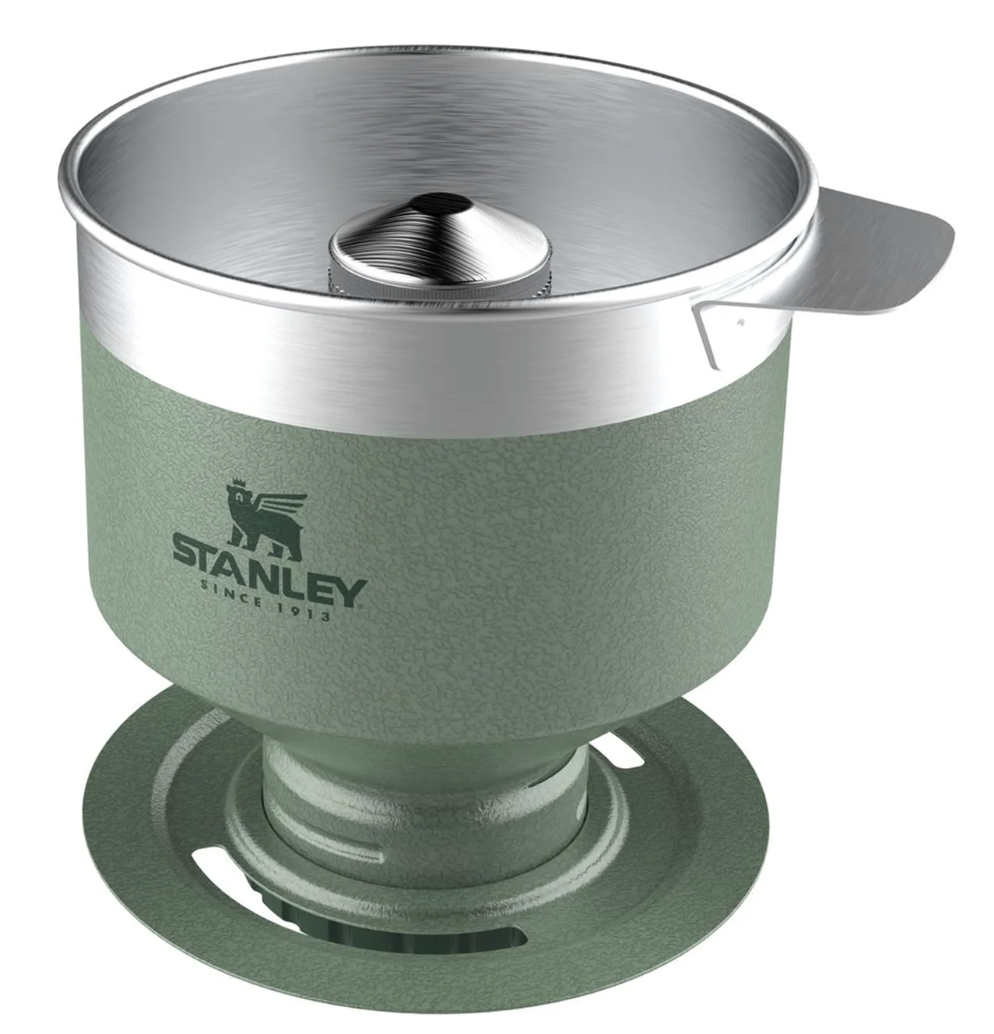
Theirishscouter was gifted a portable coffee maker by the smaller people who live in the house. Produced by the ‘Stanley’ company (of indestructible water bottle fame), it has proved ideal for brewing the perfect coffee whilst on camp. It has trekked to New Zealand and Indonesia (both in theirishscouters backyard these days) and has made perfect coffee in Borneo’s rainforests whilst on group camp, surrounded by yawning Cub Scouts. I have even taken it to hotels where machine coffee sometimes rivals instant for bitterness and lack of taste. Like the bottles, it is robust. Well worth investigating if decent ground coffee is your thing, but you also camp a lot. (theirishscouter is not being paid any fee by Stanley or anyone else. I got this as a gift and I like it/use it. Thought it would be worth sharing. That’s it!)

*apart from all the others.

https://www.gaa.ie/article/gaa-s-national-demographics-committee-report-launched

Something strange happening at Scouting Ireland….

GOOD NEWS!

An organisation that has stumbled from (mostly self-inflicted) crisis to crisis for several years, over the summer saw a couple of very subtle signs that a return to something approaching the early stages of ‘normal’ might be dawning.

First came the monumental (and welcome) news that Dr Maire Fitzgerald had been appointed as Scouting Ireland’s International Commissioner. That Maire is a highly experienced scouter, particularly in matters international is well known. That she is a towering example of integrity and among the best of the organisation’s leadership was never in doubt. That a person with a mind of her own and an aversion to Kool-aid might find themselves in such a role, was perhaps less certain, given a very apparent preference in recent years, for seat warmers and sycophants to occupy such positions.

Maire’s appointment is good news for Scouting Ireland. She is well-known and highly regarded in International Scouting. Ireland’s Scouting reputation internationally has suffered in the face of endless travails at home. Ms Fitzgerald is the perfect ambassador to reassure the international scouting community that all is not yet lost in Scouting Ireland.

The timing of an award of the ‘Bronze Wolf’ – the highest award of World Scouting – to our International Commissioner is prescient. A well-deserved recognition of solid work undertaken, but was the timing a subtle recognition by World Scouting that Scouting Ireland’s board is on the right track if it continues and expands this new approach of choosing competence over cronyism for future key appointments?

YES… MORE GOOD NEWS…

A second piece of good news arrived in late summer with the announcement that Scouting Ireland now has a Chief Executive Officer, after a number of false starts on that front. Sean Sheehan exemplifies (on paper at least) what is needed in a CEO for Scouting Ireland. He has a long and distinguished career in the corporate world, where performance standards, performance indicators, stakeholder engagement and accountability are all entry level requirements. He is a Scouting volunteer, but not a ‘lifer’ and thus dodges the baggage and tribal affiliations that have afflicted previous unsuccessful appointees.

Mr Sheehan’s appointment appears to have been non-political, which if accurate puts him in an extraordinarily strong position to begin the long process of piecing back together a fractured organisation. Occupants of the CEO role for more than a decade have from day one been perceived as (or behaved as) partisan because of ideological detritus from their volunteer days, fellowship patrol affiliations or close association with predecessors. This exacerbated problems, caused by already questionable decision processes and undermined credibility and authority from the very start.

This time, at first glance, it looks like things might be different. Mr Sheehan will have his work cut out, although on the upside no large footwear to occupy.

Two significant pieces of news. Two competent appointments to key positions. The board leave themselves open to a lot of criticism, however on this occasion they deserve credit for what looks like two potentially very positive outcomes.

***

If one wanted to give things a positive spin (and who doesn’t?), one might say that at least now it seems like it’s ‘two steps forward, one step back’, as opposed to the other way round.

However, it is hard to put a positive spin on the recent announcement by the board of Scouting Ireland that membership fees will increase to €85 per person for the 2024/25 year. The “we told you well in advance” defence alas won’t wash, given the announcement was made on September 5th, over a week into the new school term and long after most scout groups had issued communication to members and parents about subscriptions for the new year.

Most people accept that costs change over time. Invariably they go up. For example, many groups have seen overhead costs like electricity, gas and other utilities jump significantly recently. Simultaneously, rents have spiralled, and inflationary pressures have impacted beyond fuel. Families of members are not immune to these pressures.

Covid still looms large over volunteering in Ireland. Many people re-evaluated their voluntary involvement in the context of a radically changed environment. Some exited the sector entirely. Youth membership fell. Under a former CEO, Scouting Ireland National Office all but shut down for major parts of covid, yet there was still an expectation that groups would pay full fees – despite lockdowns severely curtailing Scouting activities on the ground.

This latest missive from National Office references COVID and giving members the chance “to renew and strengthen their membership in the post-covid environment”. Who writes this tripe? Hopefully not the (rather expensive) PR agency the board retain.

It sounds quite similar to the sort of corporate bullsh*t one gets in a standard letter from a bank or a utility business when prices go up and frankly, you have no choice but to suck it up, because there is no credible alternative to the ‘service’ on offer (and they know it).

Indeed, just like a utility company, the weasel words are not signed. Perhaps nobody on the board was willing to own this one.

Members have been grumbling about the democratic deficit around the imposition of fees. It is fair to say that if this was down to a vote, it would be a lot harder to implement. Possibly of greater concern is the financial difficulties it will impose on groups not expecting to have to pay (out of nowhere) an additional €1,000 for every fifty members.

The size of the increase is also not insignificant. Groups in middle class areas will struggle with this. Those volunteers working to deliver Scouting in more deprived parts of the community may have to simply hang up their neckerchiefs. Scouting is already widely seen (among the public, politicians and corporate types) as a largely middle-class pursuit. The fee jump, the sheer size of the jump and the really poor timing to the announcement will all conspire to exacerbate that.

A breakdown of the fees was recently shared with members (again, credit to the board where it is due). As a tentative first step towards better transparency around where we get our funds from and how they are spent, it was welcome.

Longer term, a much stronger link between the registration fee and tangible, visible services that members are aware of, see the value in and can easily engage with, will feed into a wider narrative that Scouting Ireland is indeed slowly making moves towards becoming a professionally run entity from which members feel they derive actual value. Who knows, genuine pride might follow.

In a strange way the fees question circles back to the good news appointments at the top of this article. If the right people are put in place by the board, based on competence and integrity rather than connections and malleability, some sort of move away from culture wars and tribal antics towards something approaching mutual respect and in time even some sort of grudging unity, could begin to happen.

This in time might radiate externally and sources of support and funding beyond just member fees could begin to crystallise.

Scouting can be magic

Okay, the recent weekend can hardly be described by anyone involved in Scouting as ‘magical’. But bear with me….

To quote the eminent scouter and lawyer Tom Clarke, there were no winners at the EGM. However to paraphrase the equally eminent scouter musician and business leader Pat Murphy, the members have made a decision and now the matter moves to the regulators investigating. In the meantime, most of us have actual Scouting work to do and its probably best if we can get on with it and try to remember as much as we can that we are all supposed to be on the same side….

In this vein, theirishscouter went into the vaults to resurrect an early article that felt like it might resonate with some members. It has been edited slightly to reflect the fact that it is now almost ten years old.

It references the work of the author JK Rowling, so if you’re not a fan this might be one to consider sitting out….

SCOUTING CAN BE MAGIC (first published in September 2014)

To those of us who are involved or have a history of involvement, Scouting can be enchanting.

Sometimes, the parallel with other types of magical activities can be striking….

Theirishscouter has been reacquainted with Harry Potter recently as the introduction to the joys of the Hogwarts Express, Professor Dumbledore et al has been effected to slightly bemused, albeit courteously attentive (most of the time), eight week old offspring.

In the midst of explaining the finer points of Diagon Alley and the vaults at Gringotts Bank to gurgling junior, the similarities between the fictional wizarding world of JK Rowling and the somewhat more real world of Scouting is once again starkly apparent.

Scouting, for those of us who are involved, is a sort of strange double life that we lead alongside our ‘normal’ existence, in much the same way as wizards and witches grapple with normality whenever they come into contact with the ‘muggle’ (non-magical) world.

PERCULIAR ATTIRE

We wear strange clothes. Yes, the uniform in current format is rather silly to some and regarded as haute couture by others, but we all wear a version of it. It makes us stand out in public. To get a sense of this, try wearing even a neckerchief on a tram or bus – try doing so in a café. You do get the occasional look – sometimes an admiring one, sometimes it is just a strange one.

The neckerchief, a piece of coloured material around our neck that might as well be a cloak, is distinctive and unique to our kind. Maybe ‘wand’ is a better comparison – all too often, a bunch of teens on a bus, in a cinema or on a forest trail draw negative vibes from the adult population in general. Upon sight of a neckerchief however, most skeptical looks melt into smiles – Reputational challenges of recent years aside, a group of scouts will still likely raise a fond reaction from the population at large and the neckerchief is by far the most recognisable indicator…

UNUSUAL PURSUITS

We do strange things. As a football enthusiast friend of theirishscouter once retorted to a comment on the futility of a bunch of scantily clad men chasing a piece of inflated pig skin around a field “sure ‘you lot’ climb all the way up a mountain, just to climb down the other side”. A point well made and the use of the term ‘you lot’ has echoes of Uncle Vernon.

We lie out in wet fields under a thin layer of material and light a fire to cook on, when there is a perfectly good bed (and stove) at home. We toil for months, years sometimes to gain proficiency in a subject that culminates in receipt of a piece of cloth to sew on to our uniform. The irish scouter once explained what was involved in earning the woodbadge, to a mildly bemused member of the Order of Malta. After the lengthy explanation, said companion summarized “and after all that, you get a string with a couple of pieces of wood on the end of it?” (worth it, in the irish scouters view of course…..)

UNCONVENTIONAL DESTINATIONS

We go to strange places. We travel by train, by boat, by coach, to remote locations where young people and adults alike have wonderful experiences and form firm friendships, and lifelong memories. The train leaves from platform 1 or 2, not 9 and a half, the coach is usually diesel powered, not drawn by a thestral, the boats don’t row themselves, but you get the idea….

DEDICATED EMPORIUMS

We have our own retail network. Yes, the Outdoor Adventure Store is a haven for outdoor enthusiasts of all types, but how many of these go ‘upstairs’ to the ‘Scout Shop’ (can non-scouting folk even see the staircase?). Was it merely a coincidence once upon a time during the days of the old CBSI ‘Scout Shop’ on Fownes Street in Temple Bar and the old SAI Supply Service on Leeson Street, that nobody outside Scouting circles ever seemed to know of or see these emporiums? Leaky Cauldron and Diagon Alley eat your heart out…..

OTHER QUESTIONS

Is the Phoenix sort of like Scouting’s equivalent of Quidditch?

Is the ‘Order of Cuchullain’ a bit like the ‘Order of the Phoenix’?

Are the four houses of Hogwarts equivalents of four different schools of thought on how Scouting should be run in Ireland?

Best to have less scouts but perfect and traditional in every way (in other words, no ‘mudbloods’) – all very Slytherin….

Challenge convention, push for change, courageous and loyal – sounds a bit like Gryffindor….

Champion kindness, focus on hard work, and be patient – It’s quite Hufflepuff…

Scouting has its fair share of ‘Ravenclaw’ types too (famed for intelligence, creativity, and wit)

Castle Saunderson could be Hogwarts, but so could Mount Mellary – sadly closed since the article was first written. (theirishscouter has a firm memory of being ‘up to no good’ late one night as a cub scout in the vast halls and corridors of Mount Mellary – alas without the benefit of a marauders map).

Larch hill could be Hogwarts too, surrounded by mysterious forests. Or Lough Dan on the edge of a deep, shimmering lake. Cut to one of the PL’s conjouring up a Patronus on the far side of Lough Dan, whilst wardens close in with sternly worded memo’s about being ‘out of bounds’.

Scouting also has it’s own hierarchy of personalities whom members tend to come into contact with over the course of the Scouting year…. Who is the Dumbledore equivalent in Scouting – towering integrity, kind and fair. Immensely powerful, but only using it for good. Not sure we have one of these anymore. Still, cometh the hour and all that….

Perhaps more entertainingly, who is the Minister of magic parallel – vain, self important, largely ineffective and reluctant to make courageous decisions, yet wielding power….

Contemplation of a village parallel for Lord Voldemort, the dark lord or ‘he who must not be named’ as the books description goes, might best be left to individual readers….

Like wizards, we in scouting squabble incessantly. The various schools of thought in the wizarding world are constantly at odds with each other and in some ways that is a good parallel with Scouting – we bicker amongst ourselves and expend vast amounts of energy that could frequently be channeled into things we in fact all agree on (we usually agree on 98% – we perhaps just have differing views on how to get there). Maybe that number is closer to 70% these days, but it is still high. Something to think about...

SECRET CODES

Scouting people are usually able to spot each other at 100 paces. We have unique methods with which to communicate with each other (a unique handshake, a secret sign, hundreds of emblems and logos and a whole vocabulary of terminology that would quickly highlight any impostor…)

Perhaps the strongest comparison between JK Rowling’s fictional world of Hogwarts and the world of Scouting however, is the endless pleasure and scope for personal growth and learning about themselves and others that Scouting delivers to young people.

Yes, the adults sometimes get carried away and some loose sight of the reason we are all supposed to be involved, but does that reduce the enjoyment of youth members – in most instances no – Scouting – in particular local Scouting works most of the time thanks to the Herculean efforts of heroic adults, some barely out of their teens, others well into their seventies and eighties and hundreds more in between. Sometimes, scouting also works in spite of adults.

Scouting can be magic and it is probably fair to say it enchants far more of us than it bewitches…

Lets hope we can find a way to keep it together.

Notes:

The eight week old baby referred to in this article is now a nine year old cub scout. He and his (Beaver Scout) sister are big fans of Harry Potter and are presently on Book 5. They are pretty big fans of Scouting too..

EXTRAORDINARY BY NAME

The board of Scouting Ireland Services CLG has recently called an Extraordinary General Meeting. Another month, another crisis in National Scouting in Ireland.  

OUT WITH THE NEW..

The board are bringing two motions to the shareholders of the company. They have signalled they want the membership to accede to the removal of two of their colleagues on the board. The grounds for the removal centres on a number of (protected) disclosures, made by these two directors, to various external entities including the Children’s Committee of the Oireachtas, the Director of Corporate Enforcement and the Charities Regulator.

The disclosures seem to centre on concerns about standards of corporate governance, and alleged financial irregularities including the ability of the company Scouting Ireland Services CLG to continue to trade as a ‘going concern’. There have also been concerns expressed about safeguarding protocols and how these are implemented at national level.

The attempt by the board to dismiss this as squabbling about minor matters and allude to personality clashes looks a little like gaslighting. These are very serious allegations, made by people who appear to know quite a bit about corporate governance.

EXTERNAL STAKEHOLDERS

In addition, the concerns raised by Jacques Kinane and Don Reynolds have also attracted the attention of the Department of Children, the government department that funds Scouting Ireland to the tune of around €1.5m per year. These concerns are not being taken lightly by important, influential external stakeholders.

The two directors have made a statement to members via public forums/fora that confirm the Office of the Director of Corporate Enforcement has already commenced an investigation into Scouting Ireland and the investigation is presently ongoing.

As this article was being prepared for publication, a statement by Messrs Kinane and Reynolds has shown evidence of not one but TWO live investigations presently underway, by government bodies. The rest of the board contend that various requests for information have been made by these entities, but that there are no formal investigations underway. The documentation published by Mr Kinane would appear to contradict this.

THE NEED FOR A DIVERSE BOARD

A statement two weeks ago from Scouting Ireland Services CLG’s latest Chairman, Paul Mannion (now in his sixth year on the board), did not mention the wider matter of wanting to remove two directors – roughly 20% of the board. Mr Mannion does talk about the need for more directors and his desire to see a diverse board and one where all opinions matter. This is not the first time the board of Scouting Ireland or it’s representative(s) appear to say one thing, whilst feverish efforts take place behind the scenes to apparently do the complete opposite.

Do we want a diverse board where all opinions are welcome, or do we not? What exactly is the role of a director if it is not to ask questions, challenge performance and demand high standards?

CALL THE LAUNDRETTE

The boards official statement on this matter appears to fret about reputational damage to Scouting Ireland from (I’m paraphrasing) ‘washing dirty laundry in public’. The usual toadies for Scouting Ireland’s longest established clique are equally concerned about ‘making us look foolish’ in their waspish social media remarks. Is it conceivable that ship may have sailed some time ago?

It is precisely because the organisation and predecessor entities fought for years to cover up ‘dirty laundry’ that we have barely any national reputation left. Theirishscouter has been taken aback by just how low an opinion is held of Scouting Ireland in corporate, civil service and political circles at present. Issuing statements to ourselves proclaiming the contrary feels like quite an inadequate response to this.

Would it not be better to demonstrate integrity and be seen as open-minded and proactive when our own people raise genuine concerns? Otherwise, it feels like we are allowing history to repeat.

The (rest of the) board contend they have tried to engage positively with Messrs Kinane and Reynolds. The two directors argue they DID raise matters ad nauseum with the board and were told to (paraphrasing) go with the flow, comply, fit in with the prevailing narrative.

CANARIES IN THE COAL MINE?

Those arguments aside, the board of Scouting Ireland are in effect asking the membership to neutralise two volunteer Scouters who, having joined the board through an electoral process, are now raising questions – serious questions – about how the entity is run.

If one takes out the ‘he said, she said’ element (and this is a rather large part of the board’s rebuttal to the opening statement of the two directors) , the fact remains that two people with far more information than an average member have rung alarm bells and have gone so far as to not only raise issues of concern with external entities in government and quasi-governmental agencies, but have done so at great personal risk and cost. Why would not one, but two people go out on a limb to this extent?

Furthermore, government agencies do not react to rumours. Investigations are not initiated on the basis of in-fighting. Submissions are carefully screened. Thresholds of evidence must be met before resources are deployed.

A third director of Scouting Ireland who theirishscouter understands had also raised concerns, mysteriously resigned recently. Several other people who joined the board from inside (and most tellingly, outside) Scouting also appear to have left with rather indecent haste over the last 24 months. There may be perfectly logical reasons why most new directors leave and most of the longer serving directors remain, but it is starting to look like a pattern.

This feels like a seminal moment for Scouting Ireland. A moment to reflect on how we want the organisation to be run, how we want the organisation to be viewed in Irish society.

What happens if members reject the board’s request to remove these two directors?

Er, nothing happens.

Nothing, except the membership retains two people in key roles who are demanding higher standards and have the personal integrity to put the demands for those standards above their own personal interests.

Incidentally, there is no risk of a closure of Scouting Ireland, as some rather hyper proclamations from people who should know better, have suggested. It is really quite disappointing that the board itself has not moved to correct this nonsense.

If the membership supports the board position and agree to the removal of these two directors, diversity of opinion on the board and accountability in decision making will be set back considerably. In addition, if any external investigation finds evidence of governance breaches (or worse) inside Scouting Ireland, the entire membership will have been complicit in attempting to gloss over it. Think about that.

Ian Elliot used words like ‘complicit’ in his report in 2018.

Surely the entire board, if diversity and differences of opinion are truly valued (as Mr Mannion set out in his recent statement), should welcome the retention of these two valuable contributors and should work with them to raise standards?

The board is not a fellowship patrol (well, one hopes its not at any rate), so like any other corporate board, members do not have to like each other, or even have a great deal in common. They merely need to work out, as grown-ups often do, how to collaborate in order to best serve the interests of shareholders. Consensus is not always good on a board of directors.

A degree of positive friction keeps everyone honest and reduces the risk of power having a corrupting effect. This is not specific to Scouting Ireland, it is human nature. Removing people who advocate for positive change or challenge the prevailing narrative weakens an organisation and increases the risk of group think, governance lapses and worse.

When all is said and done, these two directors are just like us. They are volunteers. This treatment could be doled out to any member who speaks out of turn or raises a concern. Is this really the sort of organisation we want?

If external entities do their work and find nothing, these two directors have done the organisation some service by asking questions and testing the integrity of internal systems – that is part of the job of a director.

If on the other hand, the flags raised by these two individuals lead to serious breaches in governance being uncovered, the organisation will have an opportunity to tackle such breaches head on and will get to do so quickly, rather than another scandal festering under the surface for months, before inevitably exploding across the media with all the resultant catastrophic reputational damage.

Local Scouting’s reputation has held up extraordinarily well since 2018, despite the ongoing national melodrama. This weekend’s EGM will directly tie groups and members to the course of action taken from here.

Keeping these diligent, competent, courageous, no-nonsense directors in place is a win/win for Scouting Ireland. No, they are not in the approved clique who have run the organisation since 2018, nor have they complicitly warmed a seat and toed the line, but that is precisely why they are so valuable where they are.

Time for shareholders to decide.

NOTES

Theirishscouter would strongly advocate for a secret ballot to be formally requested on the day of the EGM. If requested by three shareholders at a properly convened meeting, this must be provided by law. As the board have rightly stated, it is very important that the votes at this meeting are not only fairly cast and accounted for, but they are SEEN to be so.

  • Protected disclosures and those making them are – as the name suggests – protected under the Protected disclosures (amendment) act 2022. It is an offense under Irish law to attempt to scapegoat, ostracise, intimidate or fire a person who makes a protected disclosure. This protection extends to Directors and Volunteers of organisations (not just employees).
  • On the topic of the Board allegation that both directors did not engage with the board, the government-commissioned Jillian Van Turnhout report (2018) specifically talked about a culture of ‘blind loyalty’ to ‘cliques’ inside Scouting Ireland. In this context, the report highlighted the difference in response to any concern, complaint, ‘open call’ submitted to National Office depending on whether one is in the approved clique or outside it. Studies have shown that when people do not have confidence in the impartiality of those in authority in an organisation, they are far less likely to have confidence to raise matters internally.

Both directors nonetheless do maintain they sought to engage positively with the rest of the board so the point is disputed between the respective parties.